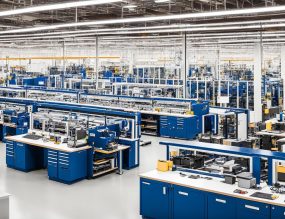
Did you know that implementing lean manufacturing practices in small and medium-sized enterprises (SMEs) can lead to significant cost reductions and improved efficiency? Lean manufacturing, traditionally associated with larger organizations, is a strategic framework that can equally benefit SMEs as they navigate the challenges of growth. By focusing on process improvement, cost reduction, and the development of strong systems for managing and developing people, lean manufacturing enables SMEs to deliver products on time, improve throughput, and lower costs, ultimately facilitating rapid growth and success. In this article, we will explore the importance of lean manufacturing for SMEs and delve into practical strategies for implementing lean principles in small businesses.
Key Takeaways:
- Implementing lean manufacturing principles can lead to cost reductions and improved efficiency in SMEs.
- Lean manufacturing enables SMEs to deliver products on time, improve throughput, and lower costs.
- By eliminating waste and optimizing workflows, SMEs can enhance overall quality and customer satisfaction.
- Effective inventory management and streamlining production processes are crucial for successful lean manufacturing implementation in SMEs.
- Embracing a culture of continuous improvement and overcoming challenges are essential for sustainable growth and success in lean manufacturing for SMEs.
The Importance of Lean Manufacturing for SMEs
Lean manufacturing plays a critical role in the success and competitiveness of small and medium-sized enterprises (SMEs). By implementing lean principles, SMEs can achieve significant benefits, including cost reduction, improved efficiency, and enhanced overall quality. Let’s explore why lean manufacturing is essential for SMEs and the advantages it brings.
Reducing Costs and Increasing Efficiency
One of the primary goals of lean manufacturing is to eliminate waste and streamline processes. By focusing on waste reduction, SMEs can optimize workflows, eliminate unnecessary steps, and reduce overall costs. Lean principles such as just-in-time production and efficient inventory management enable SMEs to minimize excess inventory, avoid overproduction, and optimize resource utilization, resulting in lower operational expenses.
In addition, lean manufacturing emphasizes continuous improvement, encouraging SMEs to constantly seek ways to enhance efficiency. By fostering a culture of improvement and empowering employees to identify and resolve process inefficiencies, SMEs can achieve higher levels of productivity and operational effectiveness.
Enhancing Overall Quality
Lean manufacturing also places a strong emphasis on quality management. By eliminating waste and improving processes, SMEs can deliver products that meet or exceed customer expectations consistently. This focus on quality not only enhances customer satisfaction but also improves the reputation and credibility of SMEs in the market.
Moreover, lean manufacturing encourages error prevention and the elimination of defects through practices such as error-proofing and root cause analysis. These initiatives help SMEs maintain high quality standards, enabling them to compete effectively with larger enterprises.
Improving Customer Satisfaction
Lean manufacturing enables SMEs to deliver products on time, enhance product quality, and respond quickly to changing customer demands. By reducing lead times and minimizing variability, SMEs can improve customer satisfaction and build stronger relationships with their clientele.
Creating a Competitive Advantage
SMEs face numerous challenges in today’s competitive business landscape. Lean manufacturing provides a strategic framework that enables SMEs to enhance their competitiveness and adaptability. By implementing lean principles, SMEs can improve their operational efficiency, reduce costs, and deliver high-quality products, giving them a competitive edge in the market.
Furthermore, lean manufacturing fosters a culture of continuous improvement and innovation, ensuring that SMEs can continuously identify and implement better ways of doing things. This adaptability makes SMEs more resilient and better positioned to thrive in a dynamic and ever-changing business environment.
Summary
Lean manufacturing is vital for SMEs as it enables them to reduce costs, improve efficiency, enhance overall quality, and deliver superior customer satisfaction. By implementing lean principles, SMEs can eliminate waste, optimize workflows, and create a culture of continuous improvement. These benefits ultimately contribute to their long-term success and competitiveness.
Identifying and Eliminating Waste in SMEs
Waste elimination is a crucial step in implementing lean manufacturing practices in SMEs. In order to optimize processes, reduce costs, and improve overall efficiency, it is important to identify and eliminate various types of waste that can hinder productivity and profitability.
Types of Waste in Manufacturing
When it comes to waste identification in small businesses, it is essential to understand the different types of waste that can occur in manufacturing processes. Here are some common types of waste:
- Overproduction: Producing more than what is necessary or exceeding customer demand.
- Waiting Times: Delays in production caused by idle time or waiting for materials, tools, or information.
- Excess Inventory: Holding excessive amounts of inventory which ties up capital and storage space.
- Unnecessary Transportation: Unnecessary movement of goods or excessive handling, resulting in inefficiency and increased costs.
- Motion Waste: Excessive movement or unnecessary actions during the production process.
- Over-processing: Performing unnecessary steps or using excessive resources beyond what is required.
- Defects: Producing defective products that do not meet quality standards, resulting in rework or customer dissatisfaction.
By conducting value stream mapping exercises and analyzing production processes, SMEs can identify specific areas where waste occurs and implement strategies to eliminate or reduce it. This involves critically examining each step of the production process and identifying activities that do not add value to the final product or service.
Lean Principles for Waste Reduction
Implementing lean principles is key in waste reduction for small businesses. Lean manufacturing provides a systematic approach to identifying and eliminating waste from processes in order to achieve maximum efficiency. The following lean principles can be applied to reduce waste:
- Value Creation: Focus on activities that add value to the customer and eliminate those that do not.
- Continuous Improvement: Strive for ongoing improvement by empowering employees to identify and resolve inefficiencies.
- Standardization: Develop and adhere to standardized work processes to ensure consistency and reduce variability.
- Pull System: Produce goods or services based on actual customer demand to minimize overproduction.
- Just-in-Time (JIT): Optimize inventory levels by synchronizing production with customer demand, reducing excess inventory and associated costs.
- Visual Management: Implement visual cues and indicators to communicate information and enhance process transparency.
- Empowered Employees: Engage and involve employees at all levels in identifying and eliminating waste, fostering a culture of continuous improvement.
By applying these lean principles, SMEs can effectively identify and eliminate waste, resulting in greater efficiency, improved productivity, and cost savings for the organization.
Streamlining Production Processes through Lean Manufacturing
Streamlining production processes is a critical aspect of implementing lean manufacturing in small and medium enterprises (SMEs). By optimizing the flow of activities from raw materials to finished products, SMEs can eliminate inefficiencies and reduce waste, all while maintaining high-quality standards.
One of the key strategies in streamlining production processes is analyzing and mapping out current workflows. This allows SMEs to identify areas for improvement and implement changes that optimize productivity and efficiency. By understanding the entire production journey, from start to finish, SMEs can identify bottlenecks, redundancies, and other areas where waste occurs.
Standardization is another crucial element that contributes to the streamlined production processes. When tasks and procedures are standardized, it ensures that employees follow consistent practices, reducing errors and variability. This not only improves overall quality but also enhances productivity and eliminates unnecessary delays or rework.
“Standardization is the key to simplification and efficiency. It provides clear guidelines and expectations for employees, allowing for seamless collaborations and process improvements.”
Benefits of Streamlining Production Processes
Efficient and streamlined production processes offer several benefits to SMEs:
- Increased efficiency: By eliminating waste, reducing lead times, and optimizing workflows, SMEs can achieve higher levels of efficiency in their production processes. This translates to greater output with fewer resources.
- Cost savings: Streamlining production processes helps SMEs identify and eliminate inefficiencies, which leads to cost reduction. By minimizing waste, streamlining workflows, and standardizing procedures, SMEs can save on materials, labor, and operational costs.
- Improved quality: With standardized processes in place, SMEs can ensure consistent, high-quality output. By reducing variability and errors, streamlining production processes enhances overall product quality and customer satisfaction.
- Enhanced competitiveness: Streamlined production processes enable SMEs to be more agile and responsive to market demands. By improving efficiency and reducing costs, SMEs can offer competitive pricing, faster delivery times, and a superior customer experience.
By implementing lean manufacturing principles and streamlining production processes, SMEs can unlock significant improvements in their operations. The result is a more efficient and cost-effective manufacturing process that enhances competitiveness and drives sustainable growth.
| Benefits of Streamlining Production Processes |
|---|
| Increased efficiency |
| Cost savings |
| Improved quality |
| Enhanced competitiveness |
Effective Inventory Management in Lean Manufacturing for SMEs
Effective inventory management is a critical component of implementing lean manufacturing principles in small and medium-sized enterprises (SMEs). By optimizing stock levels and ensuring just-in-time (JIT) inventory, SMEs can enhance operational efficiency, reduce waste, and maintain a lean operation.
One key aspect of lean inventory management is reducing excess stock. SMEs often face challenges with overstocking, which ties up capital and leads to increased storage costs. By analyzing demand patterns, implementing forecasting techniques, and utilizing data-driven inventory management systems, SMEs can optimize stock levels to match customer demand, reducing the risk of overstocking and obsolescence.
Adopting a just-in-time inventory system is another effective approach to lean inventory management. JIT involves receiving inventory only when it is needed for production or customer demand, eliminating the need for excessive stock holding. By minimizing inventory buffers and relying on efficient supply chain logistics, SMEs can reduce storage space, decrease holding costs, and enhance overall agility and responsiveness to customer needs.
Building strong relationships with suppliers is instrumental in lean inventory management for SMEs. Collaborating closely with suppliers and establishing open lines of communication enable SMEs to have a better grasp of lead times, quality standards, and delivery reliability. This allows for more accurate production planning and ensures a constant flow of materials, minimizing disruptions and delays in the production process.
“Optimizing stock levels and implementing just-in-time inventory systems are essential in lean inventory management for SMEs.”
Overall, effective inventory management is essential for achieving the goals of lean manufacturing in SMEs. By implementing lean inventory practices such as optimizing stock levels, adopting JIT inventory systems, and forging strong supplier relationships, SMEs can reduce costs, improve operational efficiency, and maintain a lean and efficient production process.
Implementing Lean Tools and Techniques in SMEs
Implementing lean tools and techniques is crucial for small and medium-sized enterprises (SMEs) looking to adopt lean manufacturing principles. By utilizing these approaches, SMEs can actively reduce waste, optimize their operations, and continuously improve their processes.
5S Methodology
The 5S methodology is a powerful tool for organizing the workplace and creating a visually controlled environment. This technique helps SMEs eliminate unnecessary items and establish a clean, efficient workspace. By implementing the 5S methodology, SMEs can increase productivity, reduce errors, and enhance safety. It involves the following steps:
- Sort: Eliminate unnecessary items and materials to create a clutter-free workspace.
- Set in Order: Organize tools, equipment, and materials in a logical and easily accessible manner.
- Shine: Implement cleaning practices to maintain a clean and tidy workspace.
- Standardize: Establish clear procedures and visual controls to ensure consistency and efficiency.
- Sustain: Develop practices to sustain the gains made through the previous steps, such as regular audits and training.
Kaizen Events
Kaizen events involve cross-functional teams in analyzing processes and identifying areas for improvement. SMEs can leverage Kaizen events to address specific challenges, streamline workflows, and drive continual improvement. These events are typically short-term, focused efforts that involve the following steps:
- Select the Target Area: Identify the specific area or process that requires improvement.
- Assemble the Kaizen Team: Create a team with representatives from different departments to ensure a holistic perspective.
- Analyze the Current State: Collect data, collaborate to identify waste, and analyze the root causes of inefficiency.
- Generate and Implement Improvement Ideas: Brainstorm ideas, evaluate potential solutions, and implement changes to optimize the process.
- Measure and Monitor: Track the effectiveness of the implemented changes and make adjustments as necessary.
- Standardize the New Process: Develop standard operating procedures (SOPs) and create visual aids to ensure consistency and ongoing improvement.
Value Stream Mapping
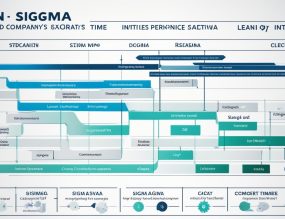
Value stream mapping provides a visual representation of the current state of a process, highlighting areas of waste and inefficiency. By mapping out the flow of materials and information, SMEs can identify bottlenecks, minimize lead times, and improve overall process performance. Value stream mapping involves the following steps:
- Select the Value Stream: Identify the specific process or value stream that requires mapping.
- Create the Current State Map: Collaborate with stakeholders to create a detailed visual representation of the current process, including key metrics and data.
- Analyze the Current State Map: Identify areas of waste, inefficiency, and opportunity for improvement.
- Create the Future State Map: Develop a future state vision by eliminating waste, optimizing the flow, and incorporating best practices.
- Propose and Implement Improvement Solutions: Generate improvement ideas, evaluate their feasibility, and implement changes to achieve the future state vision.
- Measure and Monitor: Continuously measure and monitor the performance of the new process, making adjustments as needed.
By implementing lean tools and techniques such as the 5S methodology, Kaizen events, and value stream mapping, SMEs can actively reduce waste, optimize their operations, and drive continuous improvement. These techniques empower SMEs to streamline processes, enhance productivity, and achieve sustainable growth.
Continuous Improvement and Lean Culture in SMEs
Continuous improvement is a crucial aspect of lean manufacturing in small and medium enterprises (SMEs). By fostering a culture of improvement, you can continuously strengthen your operations and enhance your competitiveness. Employee engagement and empowerment play key roles in implementing continuous improvement practices.
Creating a culture of improvement involves involving employees at all levels in identifying and resolving process inefficiencies. By encouraging communication and collaboration, you can harness the collective knowledge and experience of your workforce. Providing training and resources for continuous learning ensures that employees are equipped with the skills and tools necessary to drive improvement initiatives.
Fostering a lean culture revolves around embracing the principles of transparency, accountability, and adaptability. By establishing clear goals and performance metrics, you can hold individuals and teams accountable for their contributions to continuous improvement. Encouraging experimentation and learning from failures promotes adaptability and innovation within your organization.
“A lean culture requires commitment and a willingness to challenge the status quo. It empowers individuals to take ownership of their work and contribute to the overall success of the organization.”
Employee engagement is crucial for the success of lean manufacturing in SMEs. Engaged employees are more likely to take initiative, contribute innovative ideas, and actively participate in improvement projects. They become advocates for change and drive the continuous improvement momentum within your organization.
“Employee engagement is not just a buzzword; it is a critical factor that can make or break your lean initiatives. Engaged employees are your greatest asset in fostering a culture of improvement.”
By fostering a culture of continuous improvement and embracing lean principles, you can achieve sustainable growth and success. Your organization will become more efficient, adaptable, and responsive to customer needs. As employee engagement and empowerment increase, your workforce will be motivated to contribute their best efforts and drive positive change.
Remember, continuous improvement is a journey, not a destination. As you strive for excellence, celebrate successes, learn from failures, and always seek opportunities for improvement.
Overcoming Challenges in Lean Manufacturing for SMEs
Implementing lean manufacturing in small and medium-sized enterprises (SMEs) can be accompanied by various challenges. Overcoming these obstacles is crucial to successfully adopt lean principles and achieve significant improvements in manufacturing capabilities. The key challenges faced by SMEs in lean manufacturing include:
- Resistance to Change: Many SMEs struggle with management conservatism and resistance to change, hindering the adoption of lean principles. Overcoming this challenge requires effective change management strategies and patient leadership. Engaging employees in the change process and emphasizing the benefits of lean manufacturing can help overcome resistance.
- Limited Resources and Expertise: SMEs often have limited resources and a lack of expertise in advanced manufacturing techniques. This can make it challenging to implement and sustain lean practices. Addressing this challenge requires allocating resources for training and upskilling employees, seeking external support, and leveraging available tools and resources.
- Managing Change in Small Businesses: Managing change in SMEs requires a thoughtful approach that takes into consideration the unique characteristics of small businesses. SMEs tend to have a close-knit work environment, and change can disrupt established routines. Communicating the reasons for change, involving employees in decision-making, and providing support during the transition are essential for managing change effectively.
Despite these challenges, lean manufacturing offers a practical methodology that is more accessible for SMEs compared to larger organizations. Lean principles, with their focus on eliminating waste and fostering continuous improvement, align well with the needs and capabilities of SMEs. By addressing the challenges head-on and adopting lean principles, SMEs can unlock their full potential, enhance operational efficiency, and drive sustainable growth.
Quote:
“The successful implementation of lean manufacturing in SMEs requires overcoming resistance to change and addressing limited resources and expertise. By embracing lean principles, SMEs can enhance their operational efficiency and achieve significant improvements in their manufacturing capabilities.”
Table: Comparison of Challenges and Solutions in Lean Manufacturing for SMEs
| Challenges | Solutions |
|---|---|
| Resistance to Change | Effective change management strategies |
| Limited Resources and Expertise | Allocation of resources for training and upskilling |
| Managing Change in Small Businesses | Communication, involvement, and support |
The Future of Lean Manufacturing in SMEs
Lean manufacturing has always been adaptable and responsive to the changing dynamics of the business world. As SMEs face new challenges and opportunities, the future of lean manufacturing lies in embracing digitalization, fostering innovation, and adapting lean principles to new technologies.
One of the key aspects of the future of lean manufacturing is the integration of digitalization and lean principles. As technology continues to advance, SMEs can leverage digital tools and automation to streamline processes, improve efficiency, and reduce waste. By embracing digitalization, lean manufacturing can become even more effective in optimizing workflows, enhancing communication, and providing real-time data for decision-making.
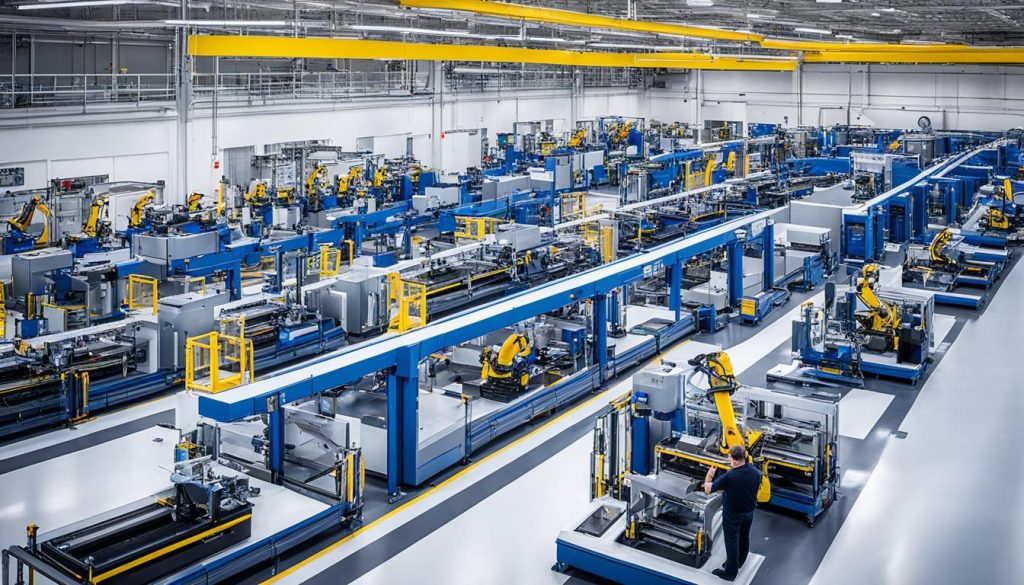
The value stream concept will also play a significant role in shaping the future of lean manufacturing. By focusing on the entire value stream, from customer demand to product delivery, SMEs can identify areas for improvement, enhance process flow, and create exceptional value for customers. This customer-centric approach will enable SMEs to differentiate themselves in a competitive market and build strong relationships with their customers.
Innovation is key in the future of lean manufacturing. SMEs need to constantly seek new ways to improve their processes, products, and services. By fostering a culture of innovation and empowering employees to think creatively, SMEs can stay ahead of the curve and continuously adapt to changing customer needs.
Adapting lean principles to new technologies will also be essential for the future of lean manufacturing in SMEs. For example, metal 3D printing has the potential to revolutionize manufacturing processes by enabling rapid prototyping, customization, and reducing lead times. By embracing such technologies, SMEs can reengineer their processes, eliminate constraints, and enhance their competitiveness in the market.
The Future of Lean Manufacturing in SMEs: Key Points
- Integration of digitalization and lean principles
- Embracing the value stream concept for enhanced process flow
- Fostering a culture of innovation
- Adapting lean principles to new technologies
| Advantages | Challenges |
|---|---|
| Improved efficiency and productivity | Resistance to change |
| Reduced waste and costs | Limited resources and expertise |
| Enhanced customer satisfaction | Managing complexity of new technologies |
The future of lean manufacturing in SMEs is bright, as it continues to evolve and adapt to the ever-changing business landscape. By embracing digitalization, fostering innovation, and adapting to new technologies, SMEs can unlock new opportunities, enhance their competitiveness, and achieve sustainable growth for years to come.
Conclusion
Lean manufacturing offers small and medium-sized enterprises (SMEs) a strategic framework to cut costs, improve efficiency, and enhance competitiveness. By implementing lean principles, SMEs can eliminate waste, optimize workflows, and enhance overall quality.
One of the key benefits of lean manufacturing for SMEs is the ability to reduce costs without compromising the integrity of products or processes. By eliminating waste and streamlining operations, SMEs can achieve significant cost savings while delivering high-quality products.
Furthermore, lean manufacturing fosters employee engagement and empowerment, leading to higher levels of productivity and customer satisfaction. By involving employees in identifying and resolving process inefficiencies, SMEs can tap into their knowledge and expertise, driving continuous improvement and innovation.
In summary, through effective inventory management, streamlining of production processes, and a commitment to continuous improvement, SMEs can achieve sustainable growth and success. By embracing lean manufacturing practices and overcoming challenges, SMEs can thrive in a competitive market environment and adapt to the changing landscape of technology and innovation.