
Embark on an exploration of the history of manufacturing, an epic saga that weaves through the fabric of societies, revolutionizing life and labor through the centuries. Manufacturing history is not merely a chronicle of objects and tools; it’s the story of humanity’s relentless pursuit of efficiency and innovation. As you delve into the past, observe the remarkable transformation in the manufacturing industry development, marked by pivotal moments and groundbreaking historical manufacturing innovations that propelled civilizations forward.
From ancient pottery wheels to modern robotic arms, the march of progress has been unceasing. Witness the ways in which our ancestors combined raw materials, skill, and ingenuity to create objects of utility and beauty. Understand how each historical milestone in manufacturing set the stage for the next leap toward the technological wonders we benefit from today. Your comprehension of these transitions not only enriches your knowledge but also hints at the everlasting human tenacity to build, refine, and excel.
Key Takeaways
- Grasp the essential milestones marking the extensive history of manufacturing.
- Understand how manufacturing industry development has been influenced by cultural, economic, and technological changes.
- Appreciate the role of historical manufacturing innovations in shaping modern societies.
- Recognize the intricate relationship between technological progress and the evolution of manufacturing methods.
- Contemplate the economic and societal impacts of manufacturing advancements throughout history.
The Dawn of Manufacturing: From Hand Tools to Simple Machines
In the nascent stages of civilization’s progress, early tools were the linchpins of survival and development. As you delve into the historical tapestry of pre-industrial manufacturing, you’ll uncover an era where the rhythm of hammers and the skill of hands shaped the world. A remarkable transformation unfolded as societies evolved from creating bespoke, handcrafted artifacts to leveraging simple machines that marked a new dawn in productivity and innovation.
Evolution from Handcrafting to Basic Machinery
The handcrafting evolution was not abrupt, but a testament to human ingenuity; a slow and steady march from the dexterity of hand tools to the rudimentary but effective mechanics of basic machinery. Consider the weaver’s loom or the potter’s wheel—simple machines that amplified human effort and precision, setting a new paradigm in the scale of production. This transformation did not merely augment efficiency; it was the prologue to a society that could sustain more complex economies and support a growing population.
Impacts of Resource Availability on Early Manufacturing
Material resources were the lifeblood of early manufacturing techniques. The availability of raw materials, such as metals, significantly influenced the advancement of early tools and consequent trade activities. Resource-rich regions thrived by developing smithing and woodworking skills that led to more sophisticated tools and machinery, while regions with scarce resources had to find creative ways to maximize their outputs with what was at their disposal.
Resource scarcity is both a limitation and a crucible for innovation. It shapes not only what is made, but how and why it is produced.
Cultural and Societal Influence on Pre-Industrial Manufacturing
Economic needs, coupled with societal values, sculpted the contours of early manufacturing. It’s intriguing to note how societal structure and cultural emphasis on certain goods directed the labor force and defined the prominence of various trades. In some cultures, pottery was central; in others, textiles or weapons. Pre-industrial societies were often characterized by a symbiotic relationship between the craftsperson and their community, where societal needs directly steered the manufacturing focus.
- Egypt’s prominence in the art of papyrus production
- Mesopotamian pottery: A blend of function and ceremonial purpose
- Iron Age Europe’s advancement in weapon and tool making
As these narrative threads intertwine, it is evident how the confluence of tools, machines, resources, culture, and society wove the fabric of early manufacturing. Reflecting on this era hones a deeper appreciation for the intricate dance between humans and their creations, a dance that continues to evolve through the ages.
Manufacturing Evolution: Birth of the Textile Industry
The fabric of society was forever changed with the advent of the textile industry, marking a crucial chapter in the manufacturing evolution. This era saw the introduction of groundbreaking inventions such as the spinning jenny and power loom—machines that redefined production capabilities, setting off a ripple effect that transformed economies around the world.
The Spinning Jenny and Power Loom
Imagine being transported back to the 18th century, when the spinning jenny first emerged as a pioneer in mechanized thread production. The innovation amplified yarn production exponentially, liberating textile workers from the toils of manual spinning. Not long after, the power loom burst onto the scene, heralding automated weaving. These breakthroughs afforded the textile industry unprecedented productivity and efficiency.
Rise of Textile Factories and their Global Influence
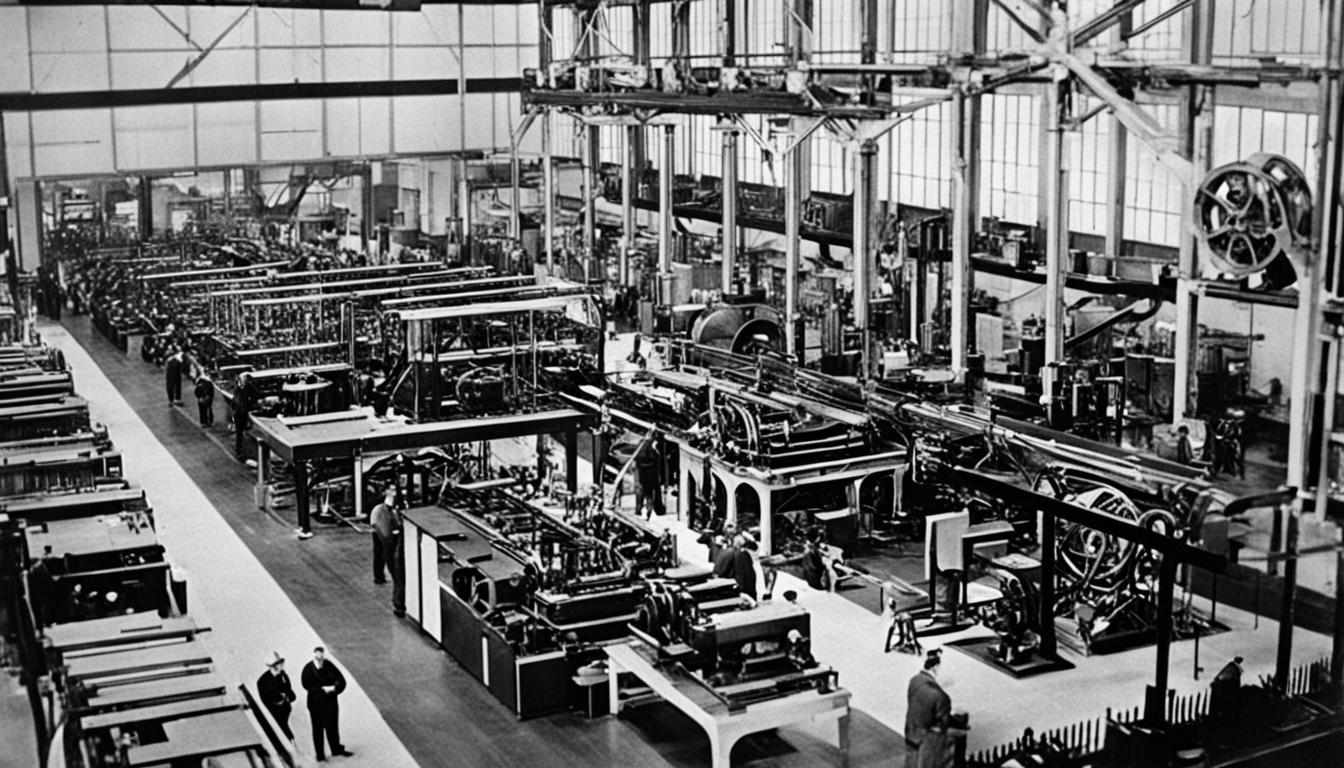
The technological leap in the textile industry gave birth to the textile factory system, clustering scores of machines under a single roof. This new model of labor and production not only revolutionized the textile industry but also had profound global economic and social impacts. From Manchester to Mumbai, textile factories became the heartbeat of urban industrial landscapes, weaving together the fabric of the global economy.
Technological Advancements in Textile Production
Subsequent technological innovations continued to weave success throughout the textile industry. Advancements in dyeing, printing, and synthetic fiber development further broadened the industry’s horizons. As automation advanced, each leap forward in technology stretched the canvas of possibilities even wider, displaying a colorful array of efficiency and innovation.
Let’s contextualize the transformative power of these technological marvels. The table below succinctly captures the before-and-after scenario, demonstrating a comparative perspective of manual and mechanized textile production.
| Attribute | Pre-Mechanization | Post-Mechanization |
|---|---|---|
| Production Speed | Limited by manual labor | Drastically increased |
| Production Volume | Small batches | Large-scale output |
| Labor Dynamics | Artisan-based, individualized | Factory system, collective |
| Societal Impact | Localized economic activity | Global trade expansion |
| Technological Influence | Minimal reliance on machine aid | High dependence on continuous advancement |
Industrial Revolution: A Paradigm Shift in Manufacturing
As you delve into the heart of the Industrial Revolution, you’ll find that this era marked a profound manufacturing evolution, characterized by an array of technological advancements in manufacturing. This pivotal period redefined not just industries, but entire societies, leading to a surge in production capabilities and innovation. Let’s explore how monumental transitions during this time set the groundwork for the highly mechanized and interconnected world we experience today.
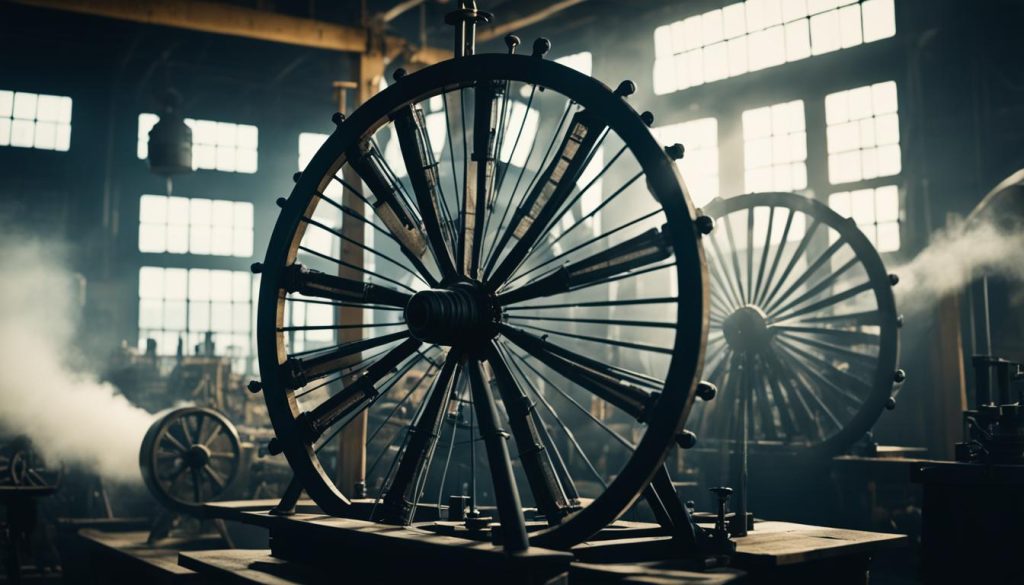
The transformation from manual labor to mechanized work was not just about the machines, but also about the far-reaching effects on global trade, urbanization, and worker’s lives. A network of railways and steamships shrunk our vast world into a connected economy, where goods and ideas could travel faster than ever before. The following table highlights key innovations and their impact on society during the Industrial Revolution.
| Innovation | Industry Affected | Impact on Society |
|---|---|---|
| Steam Engine | Transportation and Factories | Enabled mass production and rapid transport of goods and people |
| Power Loom | Textiles | Increased textile production speed and volume, shaping fashion and trade |
| Bessemer Process | Metallurgy | Revolutionized steel production, providing stronger materials for construction and machinery |
These monumental technological advancements were the fuel for the Industrial Revolution, accelerating the manufacturing evolution at an unprecedented pace. It laid a new foundation for economies, reallocating labor from agricultural to factory work, giving rise to an industrial labor class and altering the socioeconomic landscape.
- Expansion of Industries: New machinery led to the creation of numerous industries, such as textiles and steel, elevating the importance of manufacturing in the global economic hierarchy.
- Rapid Urbanization: With factories as the new powerhouses, urban areas swollen with workers, sparking rapid development of city infrastructure.
- Communication and Transportation: The telegraph and railway connected continents, creating a new pace and scale for commerce, information exchange, and migration.
In essence, the Industrial Revolution did not just tweak or improve manufacturing; it catapulted humanity into a modern era of industrial and social redesign. It posed challenges and opportunities—some addressed, others extended into our current age. As you reflect upon these transformative years, you recognize the indelible marks left on our global society and the precedents it set for continuous innovation in the manufacturing domain.
The Age of Steel and Steam: Advancing Engineering and Manufacturing
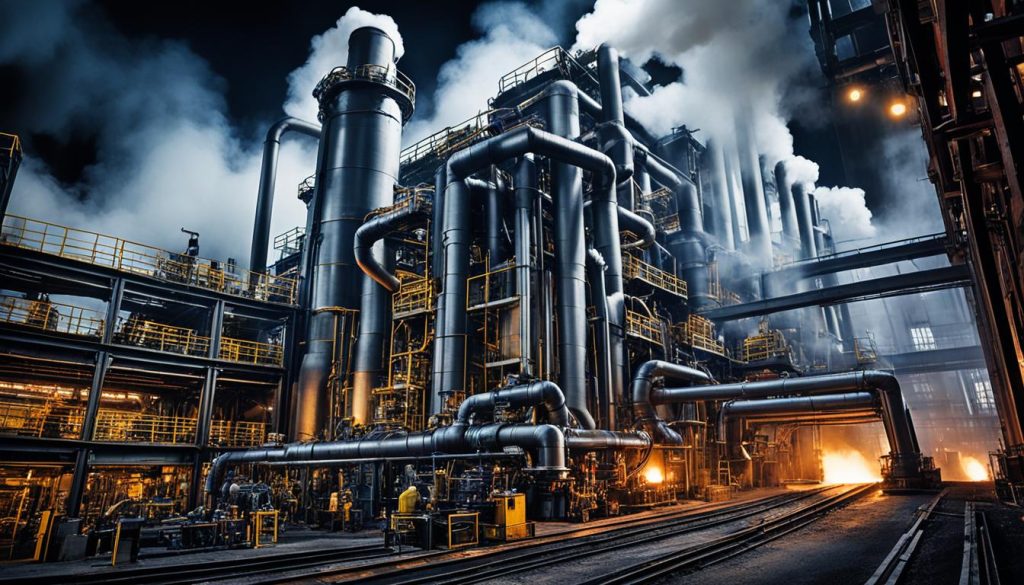
As the age of steel dawned, it reshaped the manufacturing landscape with its sturdier structures and robust materials. The expansion of steam power further fueled a revolution, not only mechanizing manufacturing processes but also contributing to the build-out of infrastructure that would become pivotal in the mass production history.
Evolving Steel Production Techniques
The transition to steel in manufacturing offered a significant advancement from iron, given steel’s superior strength and flexibility. Henry Bessemer’s invention of the Bessemer process in the mid-19th century dramatically lowered the cost of steel production, boosting its availability and application across diverse manufacturing sectors.
Steam Power: Energizing Mass Production
Steam power was another game-changer, marking an era where factories could operate on a scale previously unimaginable. The steam engine, introduced by James Watt, became a critical element in driving machinery — from locomotives that extended market reach to mechanized tools that heightened productivity.
Inventions That Transformed Manufacturing Processes
Several key inventions came to fruition throughout this era, reflecting a surge in engineering ingenuity tied directly to steel and steam. Among them were the likes of the continuous rolling mill, which allowed for the uninterrupted shaping of steel, and the steam hammer, which facilitated the forging of larger pieces of metal than ever before.
| Invention | Impact on Manufacturing | Creator |
|---|---|---|
| Bessemer Converter | Mass production of affordable steel | Henry Bessemer |
| Steam Engine | Enhanced machine operation and factory efficiency | James Watt |
| Continuous Rolling Mill | Enabled continuous shaping and finishing of metal | Henry Cort |
| Steam Hammer | Forging larger metal workpieces | James Nasmyth |
This epoch is remembered for its dramatic reshaping of the manufacturing world. Steel and steam did not merely complement existing processes; they catapulted manufacturing into a new stratum, paving the way for the automation and production capacities that would define future generations.
20th Century and Mass Production History
As you delve into the transformative era of the 20th century, an unprecedented change in the manufacturing landscape unfolds before you. This period is marked by remarkable figures and events that reshaped the realm of mass production, rippling through the fabric of society and setting a new standard for manufacturing efficiency.
The Assembly Line Revolution Led by Henry Ford
Henry Ford, a name synonymous with the assembly line, revolutionized how we look at manufacturing. Ford’s contribution was not the invention of the assembly line itself, but its refinement and application to the production of automobiles. Ford’s Model T, affectionately referred to as the ‘Tin Lizzie’, became a symbol of affordable transportation, which was made possible by the mass production techniques he pioneered. This implementation brought forward a significant reduction in production times and costs, thereby making products accessible to a wider audience and defining mass production history.
World Wars and the Acceleration of Manufacturing Innovation
During global conflicts such as the World Wars, urgency bred necessity, and necessity fathered innovation. The requirement for armaments and military technology sped up the conveyor belts of progress, resulting in accelerated manufacturing innovation. Factories quickly adapted to meet the demand for a multitude of products, which saw traditional manufacturing processes evolve into sophisticated sequences that could accommodate a wide array of materials and specifications.
Post-War Consumerism and the Manufacturing Boom
In the wake of the World Wars, a new era of post-war consumerism took root. The return to peace and stability fueled an economic boom. Consumers, empowered by increased purchasing power, sought out a variety of goods, which necessitated an expansion and diversification of the manufacturing industry. This demand surge led to innovations across the consumer goods spectrum, from appliances to automobiles, forever altering the landscape of the manufacturing sector.
Modern Manufacturing Processes and Technological Advancements
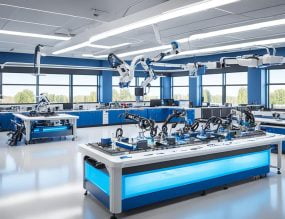
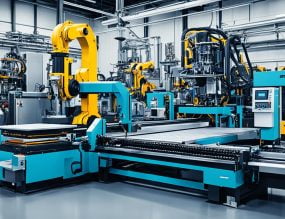
As the manufacturing industry continues to evolve, modern manufacturing processes are increasingly characterized by technological sophistication. This evolution is prominently marked by the rise of automation and the application of computer-aided design (CAD), as manufacturers seek to streamline efficiency and increase productivity. Moreover, the deployment of robotics and artificial intelligence (AI) is not just a futuristic concept, but a present-day reality that is reshaping production lines and operational protocols within factories around the globe.
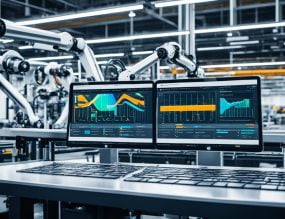
Another significant trend shaping the future of manufacturing is smart manufacturing. This innovative approach involves the utilization of interconnected and data-driven systems that work synergistically to optimize production processes. By harnessing the capabilities of the Internet of Things (IoT), smart manufacturing empowers industries to achieve unparalleled levels of efficiency, responsiveness, and adaptation to changing market demands.
While these technological advancements offer incredible opportunities for growth and efficiency, they also pose unique challenges to the workforce. The integration of technology inevitably leads to a shift in skill demands—prompting an imperative need for retraining and upskilling to ensure that employees stay abreast of the latest digital trends. Furthermore, as automation and AI become more prevalent, there’s a pressing need to navigate the socio-economic implications, ensuring that the benefits of technological progress are equitably shared across society.
| Technological Feature | Benefits | Challenges |
|---|---|---|
| Automation | Increased production speed and consistency; Reduced error rates | Job displacement; Need for workforce retraining |
| Computer-Aided Design (CAD) | Enhanced precision in design; Streamlined prototyping | Higher initial costs; Technological learning curve |
| Robotics | 24/7 operational capacity; Execution of hazardous tasks | Significant investment; Integration with human workforce |
| Artificial Intelligence (AI) | Adaptive machine learning capabilities; Predictive maintenance | Data privacy concerns; Ethical considerations |
| Smart Manufacturing | Real-time data analytics; Supply chain optimization | Security vulnerabilities; Technological inter-dependence |
In summary, the essence of modern manufacturing processes is deeply intertwined with technological advancements in manufacturing. This progression towards a more high-tech, automated, and smart manufacturing environment is not without its set of intricacies, yet it signals a future of immense possibility for innovation and economic growth. Understanding these transformations and preparing for them will be pivotal for any entity aspiring to remain relevant and competitive in the manufacturing sector.
Conclusion
As we consider the vast expanse of the manufacturing history milestones, your understanding of how we arrived at today’s industry landscape becomes profound. Reflecting on the evolution from early tools to present-day automation reveals a pattern of relentless innovation and adaptation. With each advance, whether it was the crucible of the Industrial Revolution or the proliferation of digital technology, the manufacturing industry has continually reshaped itself to meet changing demands and opportunities.
Reflecting on the Milestones of Manufacturing History
Your journey through the history of manufacturing is akin to walking the steps of giants. Each milestone, from the Spinning Jenny to the modern robotics used in smart factories, represents a leap forward not just in production capabilities, but in societal impact as well. These innovations have been pivotal in shaping economies, cities, and the very fabric of daily life, offering an invaluable perspective on human ingenuity and resolve.
Current Trends and Future Outlook of Manufacturing Industry
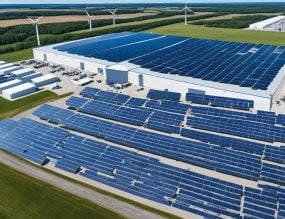
Turning your gaze to the current trends in manufacturing, you’ll notice the emergence of sustainability and customization as driving forces, signifying a shift in values and consumer expectations. Looking ahead, the future outlook of the manufacturing industry suggests a continued trajectory towards technologies that are not only efficient but also adaptive and sensitive to environmental concerns. As such, your role within or alongside this vibrant industry may well involve navigating challenges and seeking out opportunities within an ever-evolving landscape of innovation.