
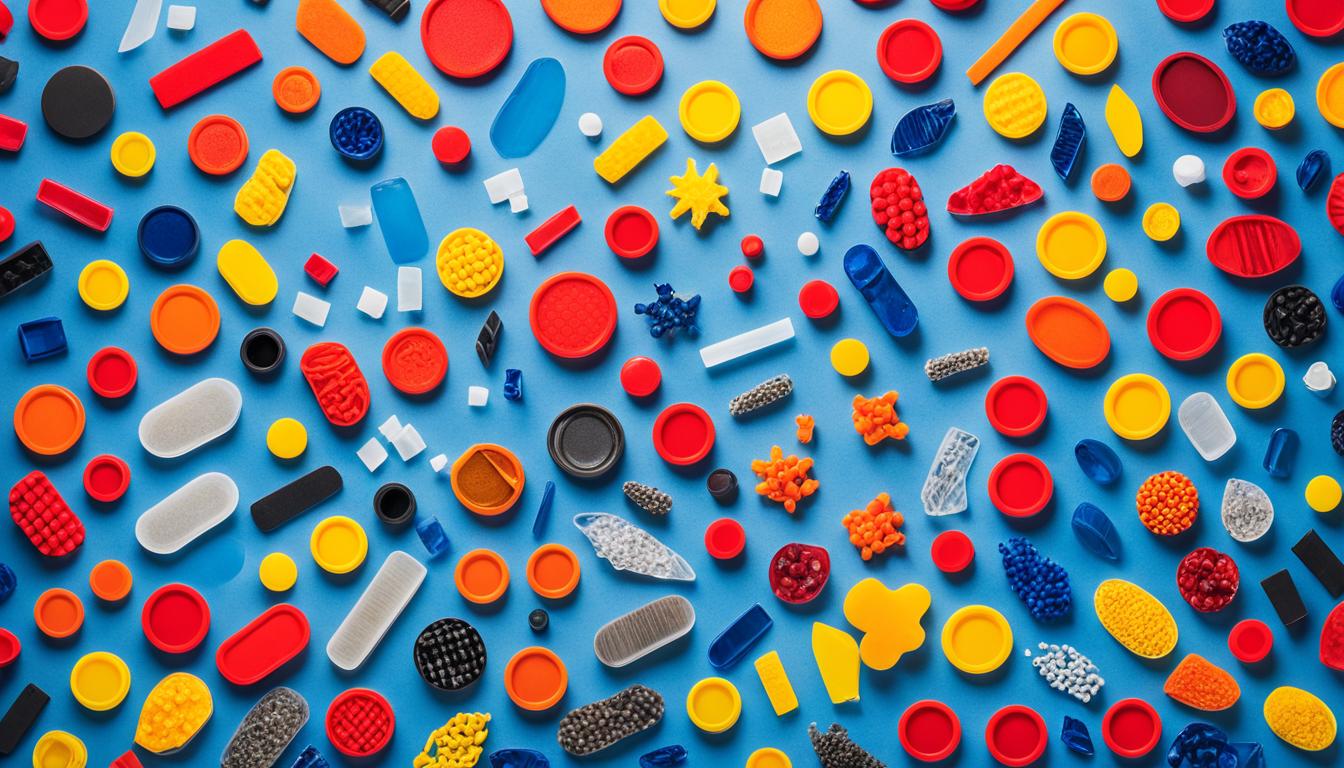
Did you know that the global plastics market is projected to reach a staggering value of $654.38 billion by 2023? This incredible figure highlights the immense scale and impact of polymers and plastics in our modern world. From everyday household items to advanced medical devices and automotive components, these versatile materials play a crucial role in numerous industries.
Key Takeaways:
- Polymers are materials composed of repeating chains of atoms or molecules, while plastics are a subset of polymers derived from crude oil and natural gas.
- Polymers can be natural or synthetic and have various properties, such as high tensile strength and resistance to chemicals.
- Advantages of polymers include sustainability, biodegradability, and biocompatibility, while plastics offer lower production costs and a wide range of applications.
- Examples of polymers range from natural ones like cellulose to synthetic ones like nylon and polypropylene.
- Plastics are synthetic polymeric materials derived from petroleum, can be amorphous or semi-crystalline, and are used in various industries.
What Is a Polymer?
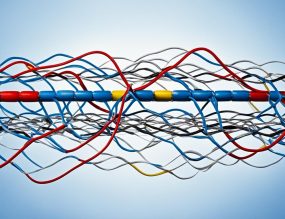
A polymer is a chemical compound made up of repeating strings of large molecules called monomers. These monomers can be natural or synthetic, depending on the desired properties of the polymer. Polymers are essential in various industries, including medicine, electronics, and construction. Their unique characteristics make them versatile materials that can be tailored to meet specific application requirements.
- Monomers: These are the building blocks of polymers. They are smaller molecules that chemically bond together to form long chains or networks.
- Natural vs. Synthetic: Polymers can be found in nature, such as proteins and DNA, or created through chemical synthesis. Synthetic polymers offer more control over their properties and can be designed for specific applications.
- Homopolymers vs. Copolymers: Homopolymers consist of repeating units of the same monomer, while copolymers contain two or more different monomers. Copolymers often exhibit unique properties derived from the combination of monomers.
Polymer chemistry plays a crucial role in understanding the structure, properties, and behavior of polymers. The properties of a polymer depend on factors such as the nature of the monomers, the length of the polymer chains, and the presence of branching or cross-linking.
Polymers have various properties that make them useful in numerous applications. They exhibit high tensile strength, which allows them to withstand significant forces without breaking. Polymers also offer resistance to chemicals, making them suitable for corrosion-resistant coatings, pipes, and containers. Furthermore, polymers can have a semi-crystalline or amorphous structure, affecting their transparency, flexibility, and thermal properties.
Understanding the structure of a polymer is essential for harnessing its properties and tailoring it to specific applications. Polymers can have linear, branched, or networked structures, which influence their elasticity, rigidity, and processability.
Now that we have explored the basics of polymers, let’s delve further into the advantages they offer compared to plastics.
Advantages of Polymers Compared to Plastics
When comparing polymers and plastics, it is important to understand the unique advantages that polymers offer over their plastic counterparts. While plastics have their own set of benefits, polymers excel in several areas, making them an attractive choice for various applications.
Polymer Advantages:
- Sustainability: One major advantage of polymers is their sustainability. Natural polymers, such as cellulose and lignin, are derived from renewable resources and are biodegradable. This makes them environmentally friendly and a preferred choice in industries focusing on sustainable practices.
- Flexibility: Synthetic polymers exhibit high flexibility, allowing for greater versatility in product design. This flexibility enables polymers to be molded into complex shapes and structures, making them ideal for customized applications.
- Biocompatibility: Polymers possess excellent biocompatibility, making them suitable for use in medical and healthcare industries. They have low toxicity and are less likely to cause allergic reactions, making them a safer choice for various medical devices and implants.
Plastic Disadvantages:
- Crude Oil Dependency: Plastics are derived from crude oil, which is a non-renewable resource. The reliance on fossil fuels raises concerns about resource depletion and contributes to environmental issues like pollution and climate change.
- Environmental Impact: Plastics are notorious for their long decomposition period, leading to widespread environmental pollution. The improper disposal of plastics has detrimental effects on ecosystems, including harm to marine life and the release of harmful chemicals into the environment.
- Toxic Fume Emission: When plastics are burned, they release toxic fumes that can pose health risks to humans and contribute to air pollution. This makes plastic combustion a significant concern and mandates proper waste management practices.
Despite these plastic disadvantages, it is important to note that plastics also have their own set of advantages, such as lower production costs, high strength-to-weight ratio, and a wide range of applications in industries like automotive and medical.
Examples of Polymers
Polymers come in a wide variety of forms, ranging from natural polymers like cellulose and lignin to synthetic polymers such as nylon, polypropylene, and polyethylene. These versatile materials find applications in various industries and everyday products, showcasing their exceptional properties and contributions to human advancement.
Natural polymers, derived from renewable sources, have been utilized for centuries. Cellulose, for example, is the main component of plant fibers and is used in the production of textiles, paper, and packaging materials. Lignin, another natural polymer, provides structural support to plants and is used in adhesives, coatings, and even biofuels.
On the other hand, synthetic polymers have revolutionized modern technology. Nylon, commonly used in textiles, provides excellent strength and resistance to wear and tear. Polypropylene, known for its heat resistance and chemical inertness, is used in packaging, automotive components, and household goods. Polyethylene, with its low-cost manufacturing and versatile properties, is widely used in packaging, pipes, and various consumer products.
“The advancements in polymer science have paved the way for revolutionary materials that fuel innovation and shape the world we live in today.”
Moreover, polymers have found applications in fields beyond traditional materials. For example, polymers have contributed to the development of biomaterials used in tissue engineering and regenerative medicine. They can mimic the structure and properties of human tissues and organs, offering potential solutions for medical treatments and transplants.
Below is an illustrative table showcasing examples and applications of various polymers:
| Polymer | Application |
|---|---|
| Nylon | Textiles, automotive components, fishing lines |
| Polypropylene | Packaging, automotive parts, household goods |
| Polyethylene | Plastic bags, bottles, pipes |
| Polyvinyl Chloride (PVC) | Construction materials, pipes, electrical insulation |
| Polystyrene | Packaging, insulation, disposable cutlery |
These examples only scratch the surface of the vast world of polymers. These versatile materials continue to be at the forefront of innovation, enabling advancements in technology, healthcare, and many other industries.
Understanding Plastic
Plastics, which are widely used in various industries, are synthetic polymeric materials derived from petroleum. They are manufactured through a process called polymerization or polycondensation. Plastics can be categorized into two main types: thermoplastics and thermosets.
Thermoplastics are plastics that can be melted and reshaped multiple times without undergoing any significant chemical change. This property makes them highly versatile and allows for easy recycling. Some common examples of thermoplastics include:
- Polyethylene
- Polypropylene
- PVC (Polyvinyl Chloride)
On the other hand, thermosets are plastics that, once formed, cannot be melted or reshaped. They are chemically crosslinked to form a rigid and durable structure. This property makes them suitable for applications where heat resistance and dimensional stability are crucial.
To better understand the differences between thermoplastics and thermosets, refer to the following table:
| Property | Thermoplastics | Thermosets |
|---|---|---|
| Melting and Reshaping | Possible, can be melted and reshaped multiple times | Not possible, do not melt once formed |
| Crosslinking | No or limited crosslinking | Chemically crosslinked to form a rigid structure |
| Recyclability | Highly recyclable | Difficult to recycle due to rigid structure |
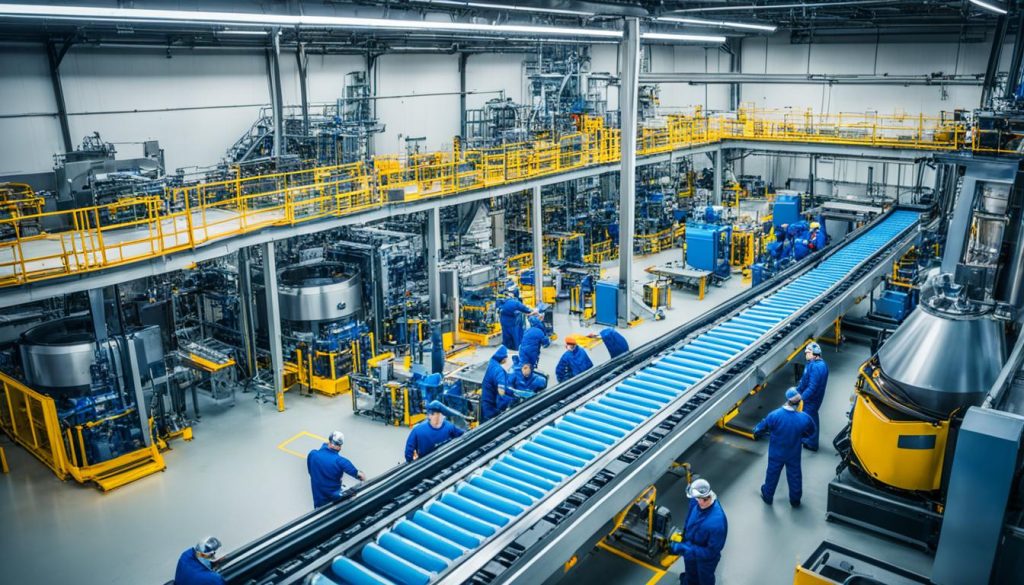
Plastics have revolutionized many industries due to their versatility and wide range of applications. From packaging materials to automotive components, plastic products play a significant role in our daily lives.
In the words of industry expert Jane Smith: “Plastics have revolutionized the manufacturing industry by providing lightweight, durable, and cost-effective solutions for various applications.”
Maintaining a balance between the benefits of plastic and the environmental impact it presents is crucial. Through responsible manufacturing and recycling practices, the industry can continue to harness the advantages of plastics while minimizing their negative consequences.
Properties of Plastics
Plastics possess a diverse range of properties that make them suitable for various applications. Understanding these properties is essential for selecting the right type of plastic for a specific use.
Some key properties of plastics include:
- Low electrical and thermal conductivity: Plastics are excellent insulators and do not conduct electricity or heat efficiently. This property makes them suitable for electrical insulation, packaging, and other applications where thermal insulation is required.
- High strength-to-weight ratio: Plastics offer a high degree of strength while being lightweight. This property makes them advantageous in industries that require strong yet lightweight materials, such as automotive and aerospace.
- Chemical stability: Plastics exhibit resistance to various chemicals, making them suitable for applications that involve exposure to corrosive substances or harsh environments.
The properties of plastics can differ based on their classification into thermoplastics and thermosets.
Thermoplastics
Thermoplastics are a type of plastic that can be melted and reshaped multiple times without undergoing any significant chemical change. This property makes them highly versatile and recyclable. Some common examples of thermoplastics include polyethylene, polypropylene, and PVC.
Thermosets
Thermosets, on the other hand, are plastics that undergo irreversible chemical reactions during their formation, resulting in a rigid and solid structure. Once formed, thermosets cannot be melted or reshaped without losing their properties. Examples of thermosets include epoxy and phenolic resins.
Plastics can also be categorized based on their structure as amorphous or semi-crystalline.
Amorphous Plastics
Amorphous plastics have a random arrangement of polymer chains, which gives them a transparent or translucent appearance. They lack a regular crystalline structure and exhibit properties such as clarity, stiffness, and impact resistance. Examples include polystyrene and acrylic polymers.
Semi-Crystalline Plastics
Semi-crystalline plastics have a well-defined arrangement of polymer chains, resulting in a crystalline region within the material. This crystalline structure provides enhanced strength, stiffness, and chemical resistance. Examples include polyethylene and polypropylene.
The properties of plastics play a crucial role in determining their suitability for specific applications. Whether it’s the low electrical conductivity of thermoplastics or the chemical stability of thermosets, understanding these properties allows engineers and designers to select the right plastic for their desired outcome.
Advantages of Plastic Compared to Polymer
Plastic offers several advantages over polymers, making it a popular choice in a variety of applications. Here are some key advantages:
- Low production cost: Plastic is relatively inexpensive to produce compared to polymers, making it a cost-effective option for large-scale manufacturing.
- High strength-to-weight ratio: Plastic materials are lightweight yet strong, making them ideal for applications where weight reduction is important without compromising durability.
- Versatility: Plastics can be easily molded into various complex shapes and sizes, allowing for endless design possibilities and customization options.
Despite these advantages, plastics do have some drawbacks that need to be considered:
- Recyclability: Plastics pose challenges in terms of recycling and waste management. Many plastics are not easily recyclable, leading to a significant environmental impact.
- Environmental impact: Plastic production and disposal can contribute to pollution and harm ecosystems. The use of non-biodegradable plastics can lead to long-term environmental issues.
While plastic offers cost efficiency, strength, and versatility, it is essential to balance these advantages with the potential environmental consequences. Sustainable alternatives and recycling efforts are crucial to mitigate the negative impact of plastic usage.
Examples of Plastics
Plastics are versatile materials that find application in numerous industries, thanks to their strength, durability, and impact resistance. Let’s explore some common examples of plastics and their uses:
Automotive Industry
In the automotive sector, plastics play a vital role in enhancing performance, reducing weight, and improving fuel efficiency. Nylon, polyethylene, and polypropylene are widely used in various components such as dashboards, bumpers, interior trims, and fuel tanks.
Medical Field
Plastics have revolutionized medical technology, enabling advancements in diagnostics, treatment, and patient care. PVC (polyvinyl chloride) is extensively used for medical tubing, blood bags, and catheters. It provides flexibility, biocompatibility, and sterilization compatibility.
Aerospace Applications
Plastics also find application in the aerospace industry, where weight reduction is critical for fuel efficiency. Polymers like polycarbonate and polyimide are used for aircraft windows, while composite materials like carbon fiber-reinforced polymers (CFRPs) are employed in structural components to enhance strength and stability.
Heavy Machinery
In heavy machinery and equipment manufacturing, plastics are utilized to reduce weight and improve performance. Polyethylene and polypropylene are commonly used for manufacturing sturdy, corrosion-resistant parts and protective covers.
These are just a few examples of how plastics contribute to various industries. Their versatility, durability, and cost-effectiveness make them invaluable in manufacturing a wide range of products.
Polymers vs. Plastics in 3D Printing
3D printing technology has opened up new possibilities in manufacturing, allowing for the creation of complex and customizable objects. When it comes to 3D printing, both polymers and plastics play a crucial role. Let’s explore the advantages and disadvantages of using these materials in the 3D printing process.
Polymers in 3D Printing
Polymers, such as polylactic acid (PLA), are commonly used in 3D printing for their versatility and ease of use. PLA is a popular choice for short-life-cycle, non-load-bearing parts. Its biocompatibility and availability in various colors make it suitable for applications like prototyping and educational purposes. However, PLA is not as strong as other materials and may not be suitable for more demanding applications.
A popular alternative to PLA is acrylonitrile butadiene styrene (ABS). ABS offers improved durability and is commonly used for parts that require higher impact resistance, such as automotive components and functional prototypes. With its ability to withstand higher temperatures, ABS is a suitable choice for more demanding applications.
Plastics in 3D Printing
Plastics, on the other hand, provide exceptional strength and lightweight properties, making them desirable for 3D printing applications. They offer advantages such as high strength-to-weight ratio and the ability to replicate complex designs. Plastics like polyamide (Nylon) and polycarbonate (PC) are commonly used in 3D printing to create functional prototypes, consumer products, and lightweight parts for various industries.
However, it’s crucial to consider the environmental impact of using plastics in 3D printing. Some plastics release harmful fumes during the printing process, and non-biodegradable plastics can contribute to waste accumulation. Finding sustainable alternatives and proper disposal methods for plastic waste is essential.
Determining the Best Choice
The choice between polymers and plastics in 3D printing ultimately depends on the specific requirements of the application and the desired properties of the final product. Polymers offer flexibility, biocompatibility, and ease of use, making them suitable for a wide range of applications. Plastics, on the other hand, excel in providing strength, lightweight properties, and the ability to replicate complex designs.
It’s worth noting that advancements in 3D printing technology and materials are ongoing, providing a continuous stream of new options and possibilities. It’s essential for manufacturers, designers, and researchers to stay updated on the latest developments to make informed decisions and push the boundaries of 3D printing further.
Advantages of Polymers in 3D Printing
When it comes to 3D printing, polymers offer numerous advantages that make them a popular choice for creating innovative designs and functional prototypes. From tissue and organ formation to enhanced biodegradability and biocompatibility, polymers open up a world of possibilities in the 3D printing industry.
Printing Cell-Loading Hydrogels for Tissue and Organ Formation
Polymers in 3D printing enable the creation of cell-loading hydrogels, revolutionizing the field of tissue engineering and regenerative medicine.
One of the key advantages of using polymers in 3D printing is the ability to print cell-loading hydrogels, which are essential for tissue and organ formation. Hydrogels provide a 3D environment that supports cell growth and mimics the natural extracellular matrix. These hydrogels can be customized and precisely printed layer by layer, allowing for the creation of complex, intricate structures with great precision.
By utilizing polymers in 3D printing, researchers and medical professionals can develop artificial tissues and organs that closely resemble the native biological structures. This opens up new possibilities in personalized medicine, drug testing, and even transplantation, as the printed tissues and organs can be tailored to individual patients’ needs.
Use of Natural Polymers as Fillers in Plastic 3D-Printing Filaments
Natural polymers can be incorporated as fillers in plastic 3D-printing filaments, enhancing biodegradability and biocompatibility.
In 3D printing, natural polymers can be utilized as fillers in plastic filaments, improving the overall biodegradability and biocompatibility of the printed objects. By combining synthetic plastics with natural polymers such as cellulose or chitosan, the resulting composite materials exhibit enhanced sustainability and reduced environmental impact.
These natural fillers not only improve the biodegradability of the printed objects but also offer superior biocompatibility, making them suitable for applications in the medical field. The incorporation of natural polymers can enhance the interaction between printed objects and living tissues, promoting better integration and compatibility.
Creating Complex Structures and Functional Designs
Polymers provide the flexibility to create intricate, complex structures and functional designs that fulfill specific requirements.
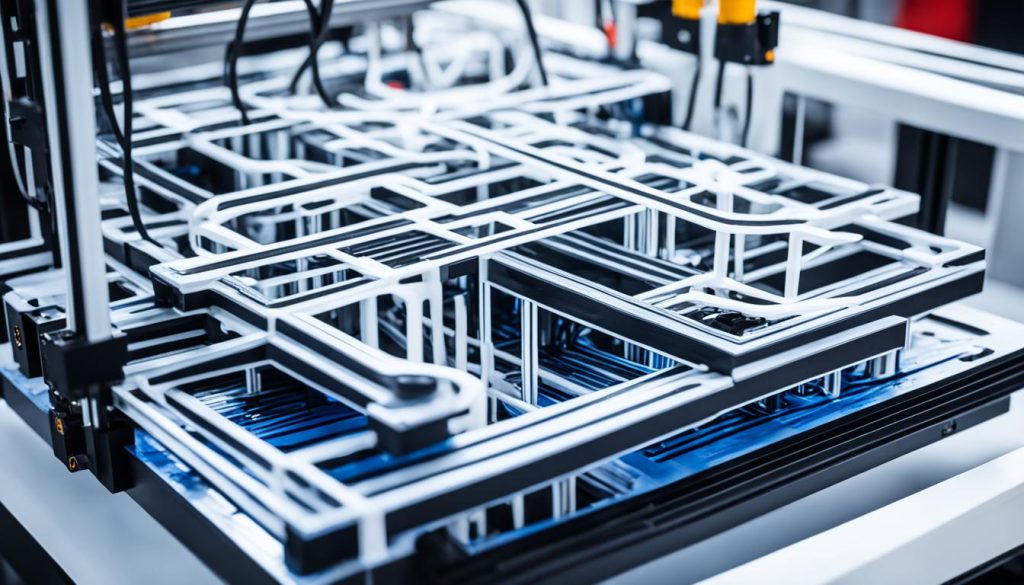
With their versatility, polymers enable the production of complex structures and functional designs that would be difficult or even impossible to achieve with traditional manufacturing methods. 3D printing with polymers allows for the creation of lightweight yet robust components with intricate geometries, hollow structures, and internal channels.
From aerospace applications that require lightweight yet durable parts to custom-designed implants for medical purposes, polymers in 3D printing offer unparalleled design freedom. By harnessing the power of polymers, engineers and designers can unleash their creativity and push the boundaries of what is possible in product development.
| Advantages of Polymers in 3D Printing |
|---|
| Printing cell-loading hydrogels for tissue and organ formation |
| Use of natural polymers as fillers in plastic 3D-printing filaments |
| Creating complex structures and functional designs |
Advantages of Plastic in 3D Printing
Plastic 3D printing offers a range of advantages, making it a popular choice for various applications. One of the key advantages is the ability to produce strong, lightweight parts that can effectively replace traditional metal components. This opens up new possibilities for industries such as aerospace, automotive, and consumer goods.
With plastic 3D printing, you can create complex geometries and intricate designs that would be challenging to achieve with other manufacturing methods. This flexibility allows for innovative product development and enables designers to push the boundaries of what is possible.
Moreover, plastic 3D printing is a versatile method for proof-of-concept and prototyping. It allows for rapid development and iterative design processes, helping to reduce time to market and overall production costs.
“Plastic 3D printing enables the production of strong, lightweight parts that offer design freedom and cost savings.”
However, it’s important to note that some plastics used in 3D printing can release harmful fumes during the printing process. Proper ventilation and adherence to the manufacturer’s safety guidelines are imperative to ensure a safe working environment.
Additionally, the environmental impact of non-biodegradable plastics used in 3D printing should be considered. While plastic offers numerous advantages in terms of strength and versatility, it’s crucial to explore sustainable alternatives and take steps towards reducing plastic waste.
Overall, plastic 3D printing provides significant advantages in producing strong, lightweight parts, offering design freedom and cost savings. As technology advances and sustainability remains a priority, it’s essential to balance the advantages of plastic with responsible manufacturing practices.
Conclusion
Polymers and plastics have transformed numerous industries, providing invaluable contributions with their distinct properties and versatile applications. Polymers, with their inherent flexibility, sustainability, and biocompatibility, offer a range of possibilities for various manufacturing needs. On the other hand, plastics bring strength, versatility, and cost-effectiveness to the table. The choice between polymers and plastics ultimately depends on the specific requirements of each application and the desired properties of the final product.
When considering materials for a particular application, polymers excel in offering flexibility and adaptability while being mindful of environmental impact. With their capacity for innovative designs and their ability to be tailored for specific needs, polymers provide solutions that align with sustainable practices.
Plastics, on the other hand, showcase their strength, versatility, and cost-effectiveness. Their valuable properties, such as durability and lightness, make them ideal for numerous industries and applications, ranging from automotive to aerospace.