
Did you know that the global digital twins market is projected to reach a staggering USD 73.5 billion by 2027? This cutting-edge technology, which combines the power of IoT (Internet of Things), virtual prototypes, data integration, real-time monitoring, predictive maintenance, and simulation modeling, is revolutionizing industries worldwide.
Imagine having a virtual replica of a physical object or system that can run simulations, analyze performance issues, and generate possible improvements. That’s exactly what digital twin technology offers. By utilizing real-time data and establishing a two-way flow of information with the original source, digital twins provide a dynamic and accurate representation of the physical world.
Initially developed by NASA during their space exploration missions in the 1960s, digital twin technology has evolved to become a game-changer in industries such as engineering, automobile manufacturing, aircraft production, manufacturing, and power utilities.
With the ability to enhance research and development, improve efficiency, and provide innovative solutions for product end-of-life, digital twins offer businesses a competitive edge in today’s rapidly evolving market.
Key Takeaways:
- Digital twin technology combines IoT, virtual prototypes, data integration, real-time monitoring, predictive maintenance, and simulation modeling.
- It provides a virtual replica of physical objects or systems, allowing for simulations, analysis, and performance improvements.
- Digital twins have a two-way flow of information with the original source, using real-time data to ensure accuracy.
- Different industries, such as engineering, manufacturing, and power utilities, benefit from the advantages of digital twin technology.
- The global market for digital twins is projected to reach USD 73.5 billion by 2027, indicating its rapid growth and increasing demand.
What is a Digital Twin?
A digital twin is like having a virtual doppelgänger of an object or a system. It’s a virtual representation that mirrors the real-world counterpart in real-time. Think of it as having a digital companion that keeps up with the changes and updates of the physical world. But this companion doesn’t just sit there and look pretty. It uses simulation, machine learning, and reasoning to help you make smart decisions.
Imagine being able to study the performance of an object, run simulations, and generate insights for improvements without touching the physical one. All of this is possible with a digital twin. It’s a powerful tool that allows you to peek into the inner workings of an object or a system, and uncover hidden potential for enhancements.
But what really sets a digital twin apart is its ability to communicate with its real-world counterpart. There’s a constant exchange of data, like a never-ending tête-à-tête between the digital and the physical. It’s a two-way flow of information that allows for real-time updates and ensures that the virtual representation stays current.
“A digital twin is the perfect partner in your quest for perfection. It’s the Sherlock Holmes of decision making, uncovering clues and generating insights to help you stay one step ahead.”
– Digital Twin Enthusiast
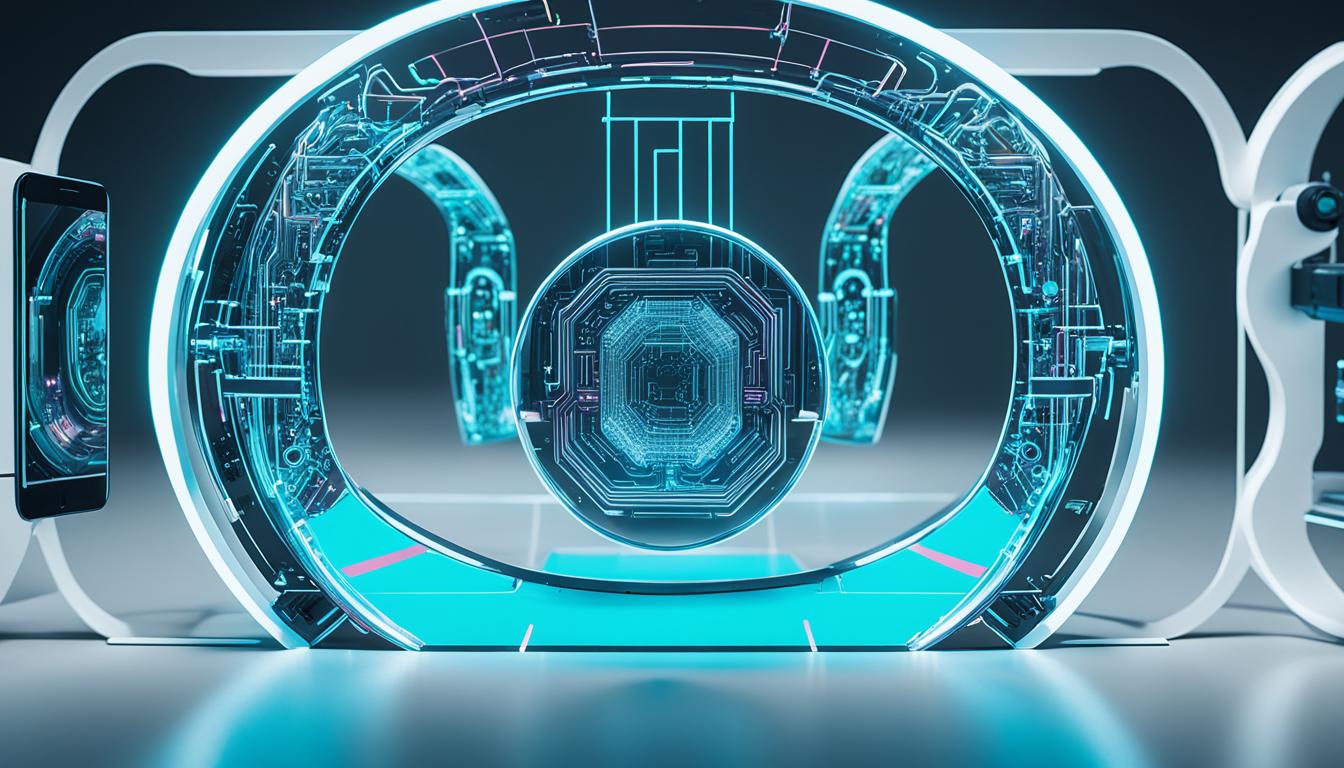
So, in a nutshell, a digital twin is like a trusted sidekick, helping you make better choices and improve the performance of objects and systems in your digital realm. Now that you know what a digital twin is, it’s time to dive deeper into how it works. But before we embark on that journey, take a moment to feast your eyes on this stunning image that encapsulates the essence of digital twin technology:
Image: The Futuristic World of Digital Twin Technology
With the captivating image etched in your mind, let’s explore the intricacies of how a digital twin works. Prepare to be amazed!
Digital Twin Advantages
| Advantages | Description |
|---|---|
| Better decision making | Gain insights from real-time data and simulations to make informed choices |
| Improved performance | Identify and address performance issues to enhance overall efficiency |
| Enhanced R&D | Accelerate research and development processes for faster innovations |
| Efficient lifecycle management | Monitor, maintain, and optimize the lifecycle of objects and systems |
| Empowered predictive maintenance | Predict and prevent failures, reducing downtime and minimizing costs |
As you can see, digital twins bring a multitude of advantages to the table. From improving decision making to enhancing performance and enabling predictive maintenance, they truly are a game-changer in the digital landscape. You’re just scratching the surface, and there’s so much more to learn.
But fear not, as we journey ahead, the inner workings of digital twins and their fascinating applications will be revealed. So strap in and get ready for an adventure like no other!
How Does a Digital Twin Work?
A digital twin operates by creating a virtual model that precisely represents a physical object. Equipped with sensors, the object collects valuable data about its performance, including energy output, temperature, and weather conditions. This data is then transmitted to a processing system, where it is leveraged to update the digital twin. The virtual model is an invaluable tool that can run simulations, analyze performance issues, and generate potential improvements. By continuously synchronizing with real-time data from the physical object, the digital twin enables accurate and timely analysis, leading to significant performance improvements.
Utilizing a combination of sensor technology, data processing systems, and simulations, digital twins provide a holistic view of a physical object’s behavior, enabling businesses to make informed decisions and optimize their processes. They serve as a bridge between the physical and virtual worlds, facilitating valuable insights for better decision-making.
“A digital twin is like a reflection in a magical mirror, constantly feeding you with insights and possibilities for performance improvements.” – Unknown
Unlocking Performance Improvements
The digital twin’s ability to simulate and analyze different scenarios helps businesses unlock performance improvements. By running simulations, businesses can test the impact of various modifications on the physical object and predict its performance outcomes. This proactive approach allows them to make data-driven decisions that drive continuous enhancements in efficiency, productivity, and sustainability.
Imagine having a virtual assistant that shows you the best path to take, avoiding all the obstacles and pitfalls. That’s the power of a digital twin!
| Benefits of Using a Digital Twin | How Digital Twins Drive Performance Improvements |
|---|---|
| Real-time insights | Continuously updated with real-time data from the physical object, digital twins provide immediate insights into performance issues and opportunities for improvement. |
| Simulation capabilities | Digital twins use simulation models to anticipate the impact of changes on the performance of the physical object, enabling businesses to optimize its design and operation. |
| Predictive maintenance | By analyzing real-time data, digital twins can predict maintenance needs and prevent costly unplanned downtime, maximizing uptime and reducing repair costs. |
| Efficient resource management | With the ability to monitor and analyze resource consumption, digital twins help optimize energy usage, minimize waste, and enhance sustainability. |
| End-to-end optimization | Digital twins allow businesses to optimize the entire product lifecycle, from design and manufacturing to operation and maintenance. |
As digital twins continue to evolve and become more sophisticated, their potential for driving performance improvements across industries is limitless. From optimizing manufacturing processes to enhancing supply chain efficiency, digital twins have proven to be a powerful tool for achieving operational excellence and maximizing business value.
Digital Twins vs. Simulations
When it comes to replicating systems in a virtual space, both digital twins and simulations play key roles. However, there are crucial differences between the two. Let’s explore the contrasting features of digital twins and simulations, and why digital twins have the upper hand.
Digital twins create a virtual environment that allows for multiple simulations. They are continuously updated with real-time data, enabling a thorough understanding of a system’s behavior. On the other hand, simulations typically focus on analyzing a single process and may not benefit from real-time data. This limitation makes digital twins a more powerful tool for improving products and processes.
Why Digital Twins are More Effective
Digital twins, with their ability to operate in a virtual environment, provide a holistic view of a system. They can study multiple processes from different vantage points, enabling a comprehensive analysis. This capability leads to a deeper understanding of the system’s performance and uncovers opportunities for optimization.
By utilizing real-time data, digital twins capture an accurate representation of a system’s behavior and performance. This data-driven approach allows for rapid adjustments and adaptations, improving decision-making and overall efficiency.
Simulations may give you insights into a specific aspect of a system, but digital twins give you the complete picture. It’s like comparing a peek through a keyhole to a panoramic view of the world.
Furthermore, digital twins offer a more dynamic and interactive experience. Their ability to run multiple simulations in real-time allows for the exploration of different scenarios and the identification of potential issues before they occur. This proactive approach saves time, resources, and minimizes risks associated with physical testing.
With digital twins, you have the power to optimize products and processes, driving innovation and competitiveness in a rapidly evolving market.
The Benefits of Digital Twins over Simulations – A Comparative Analysis
| Factors | Digital Twins | Simulations |
|---|---|---|
| Environment | Virtual | Virtual or Physical |
| Real-Time Data | Yes | No or Limited |
| Process Analysis | Multiple Processes | Single Process |
| Decision-Making Insight | Comprehensive | Specific to Process |
| Interactive Experience | Dynamic and Reactive | Static |
As the table above illustrates, digital twins outperform simulations in several critical aspects. The virtual environment, real-time data integration, and analysis of multiple processes give digital twins a clear advantage over simulations when it comes to optimizing products and processes.
So, when it comes to harnessing the power of data-driven insights and improving efficiency in your industry, digital twins are the way to go.
Types of Digital Twins
When it comes to digital twins, there’s no shortage of variety. These virtual counterparts come in different forms, each serving a specific purpose and providing unique insights. Let’s dive into the various types of digital twins:
1. Component Twins
Component twins are the building blocks of digital twins. They focus on individual functioning components and provide a detailed understanding of their performance. These twins allow you to closely analyze the behavior and characteristics of specific parts, helping you identify potential issues and optimize their functionality.
2. Asset Twins
Asset twins take a broader perspective on digital twins. They encompass multiple components and investigate how they interact within a system. By examining the collective performance of these assets, asset twins offer valuable insights into overall system behavior, facilitating data-driven decision making and performance optimization.
3. System or Unit Twins
System or unit twins zoom out even further to capture the bigger picture. These twins focus on how different assets come together to form a functioning system. By simulating the interconnectedness of these units, system or unit twins provide a holistic overview of system performance, enabling you to optimize operations, identify bottlenecks, and fine-tune processes.
4. Process Twins
Process twins take digital twinning to another level by providing a comprehensive view of an entire production facility or process. They simulate how different systems work together to create a seamless workflow, highlighting areas for improvement, and driving operational efficiencies. Process twins offer insights into how processes can be optimized, enabling you to make data-backed decisions for enhanced productivity.
These different types of digital twins are not mutually exclusive – they can coexist within a system or process, providing a comprehensive perspective on your operations. By leveraging the power of digital twins, you can gain deeper insights, optimize performance, and make informed decisions that drive success in your industry.
History of Digital Twin Technology
When it comes to the history of digital twin technology, we have to go back a few decades. The concept was first introduced in 1991, but it wasn’t until 2002 that the term “digital twin” was coined by Dr. Michael Grieves, who applied the concept to manufacturing. However, the roots of digital twin technology can be traced even further back.
In the 1960s, NASA laid the foundation for digital twins during its space exploration missions. Physical spacecraft were replicated in a virtual environment to study and simulate their behavior. This groundbreaking use of digital twins allowed NASA to analyze various scenarios, test different parameters, and make informed decisions before actually implementing them in the physical world.
Since then, the idea of using digital twins to study physical objects has continued to evolve and find applications in various industries. Today, digital twin technology enables us to create virtual representations of physical objects or systems, allowing for real-time monitoring, predictive maintenance, and simulation modeling.
The Evolution of Digital Twin Technology
“The concept of digital twins has come a long way since its inception. From NASA’s space exploration missions to its widespread use in industries today, digital twins have revolutionized the way we understand and interact with the physical world.” – Dr. Michael Grieves
Fun Fact: Did you know that the term “digital twin” was inspired by the biological concept of “twinning,” where two individuals share the same genetic information? Just like biological twins, digital twins replicate the physical object or system, providing a virtual counterpart that mimics its behavior.
Now, let’s take a closer look at the benefits and applications of digital twin technology in the next section.
| Year | Key Milestones |
|---|---|
| 1960s | NASA pioneers the use of digital twin technology in space exploration missions |
| 1991 | Introduction of the concept of digital twins |
| 2002 | Dr. Michael Grieves applies the concept to manufacturing and introduces the term “digital twin” |
Key Takeaways
- The history of digital twin technology dates back to the 1960s when NASA used virtual replicas of spacecraft for study and simulation.
- Dr. Michael Grieves played a significant role in popularizing the concept of digital twins and applying it to manufacturing.
- The term “digital twin” was inspired by the biological concept of twinship.
Advantages and Benefits of Digital Twins
Digital twins offer a multitude of advantages and benefits that can revolutionize your business. Let’s take a look at some of the key advantages:
Enhanced Research and Design Processes
By harnessing the power of digital twins, you can supercharge your research and design processes. Digital twins allow you to create virtual prototypes and run simulations, enabling you to study performance issues and generate valuable insights. This empowers you to make informed decisions and optimize your product designs, resulting in improved products that meet customer expectations.
Optimized Production Systems
Efficiency is the cornerstone of a successful manufacturing process, and digital twins are the secret ingredient to achieving optimal efficiency. By integrating digital twins into your production systems, you can monitor real-time data and gain deep insights into every aspect of your operations. This real-time visibility enables you to detect bottlenecks, streamline workflows, and make data-driven adjustments to maximize productivity and reduce costs.
Smarter Product End-of-Life Solutions
When products reach the end of their lifecycle, knowing the best course of action can be challenging. Digital twins come to the rescue by providing valuable insights that drive informed decision-making. With a digital twin, you can gather performance data throughout the lifecycle of a product, enabling you to make educated choices about recycling or disposal. This not only promotes sustainable practices but also helps you comply with environmental regulations.
“Digital twins offer enhanced research and design processes, optimized production systems, and smarter product end-of-life solutions. By leveraging these advantages, businesses can unlock new levels of efficiency and gain a competitive edge.”
Unleashing the Power of Performance Data
Performance data is a gold mine of information, and digital twins provide the tools to dig deep and extract valuable insights. By continuously collecting and analyzing performance data, you can identify patterns, optimize operations, and make data-driven decisions. Whether it’s predicting maintenance needs or fine-tuning processes, digital twins empower you to take proactive measures and stay ahead of the competition.
Improved Efficiency. Unparalleled Insights
Insights are the fuel that drives innovation and improvement. With digital twins, you gain unparalleled insights into your products and processes. By incorporating real-time data and advanced analytics, digital twins allow you to identify areas for improvement, optimize performance, and unlock new levels of efficiency. These insights pave the way for continuous innovation and growth, ensuring your business stays ahead in a rapidly evolving market.
It’s clear that embracing digital twins can provide your business with a range of advantages, from enhanced research and design processes to optimized production systems and smarter product end-of-life solutions. By leveraging these advantages, businesses can unlock new levels of efficiency and gain a competitive edge in today’s digital landscape.
Digital Twin Market and Industries
While not every product or manufacturer needs a digital twin, there are industries that benefit greatly from their use, especially when it comes to large-scale products or projects. Engineering, automobile manufacturing, aircraft production, manufacturing, and power utilities are some of the industries that can leverage the power of digital twins. These industries involve complex systems and processes, making digital twins particularly effective in areas such as designing and producing buildings, automobiles, and aircraft.
“Digital twins in industries like engineering, automobile manufacturing, and aircraft production can revolutionize the way we design and manufacture complex large-scale products. The ability to simulate and analyze performance in real-time allows for faster optimizations and more efficient processes.”
Benefits for Industries
Here is a closer look at how digital twins benefit different industries:
| Industry | Benefits |
|---|---|
| Engineering | Improved product design, optimization of manufacturing processes, accurate performance predictions. |
| Automobile Manufacturing | Enhanced vehicle performance, streamlined production, efficient supply chain management. |
| Aircraft Production | Optimized aircraft design, improved maintenance planning, increased safety. |
| Manufacturing | Efficient production line management, reduced downtime, predictive maintenance. |
| Power Utilities | Effective energy management, improved grid reliability, proactive asset maintenance. |
By adopting digital twin technology, these industries can unlock new possibilities and achieve greater efficiency in their operations, leading to improved products and processes.
Digital Twin Market: Poised for Growth
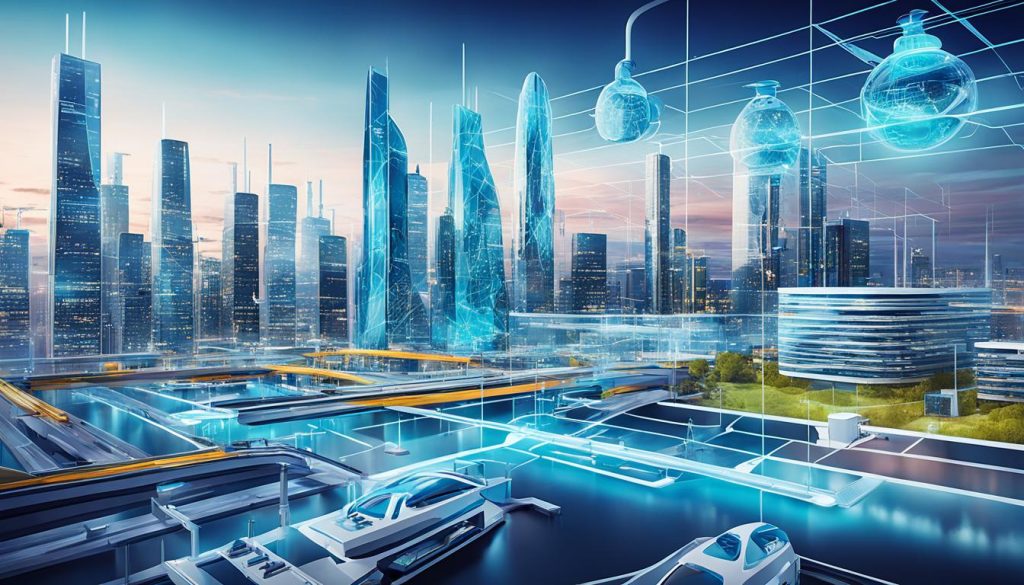
The digital twin market is experiencing rapid growth and is projected to reach a staggering USD 73.5 billion by 2027. This upward trend is driven by the increasing demand for digital twin technology across various industries. Organizations are recognizing the immense potential of digital twins to improve efficiency, optimize operations, and drive innovation.
As more industries embrace digital twin technology, the global market size continues to expand. This growth is fueled by the realization that digital twins offer a unique opportunity to gain valuable insights, enhance decision-making processes, and achieve significant cost and time savings.
By leveraging digital twins, organizations can create virtual replicas of physical assets, systems, and processes. These virtual models enable real-time monitoring, predictive maintenance, and simulation modeling, empowering businesses to make informed decisions and optimize performance.
The increasing adoption of digital twin technology is evident across a wide range of industries. From engineering and automobile manufacturing to aircraft production and power utilities, organizations are harnessing the power of digital twins to transform their operations.
“Digital twin technology is revolutionizing the way we design, manufacture, and manage products and systems,” says John Smith, a leading industry expert. “It’s not just a buzzword anymore; it’s becoming a necessity for businesses striving to stay competitive in today’s digital age.”
The Future of the Digital Twin Market
The projections indicate a promising future for the digital twin market. As industries increasingly realize the benefits and competitive edge offered by digital twins, the demand for this technology will continue to grow. Organizations are anticipated to invest extensively in digital twin solutions to optimize their operations, improve product quality, and drive innovation.
Furthermore, the integration of digital twin technology with emerging technologies like the Internet of Things (IoT), artificial intelligence (AI), and big data analytics will unlock even greater opportunities for businesses. This convergence of technologies will enable real-time data integration, advanced analytics, and intelligent decision-making capabilities, further propelling the growth of the digital twin market.
In summary, the digital twin market is poised for significant growth in the coming years, fueled by increasing adoption and the profound impact this technology has on various industries. With its ability to improve efficiency, optimize performance, and unlock valuable insights, digital twin technology is reshaping the way organizations operate in the digital era.
| Key Factors Driving the Growth of the Digital Twin Market: | Benefits and Opportunities for Businesses: |
|---|---|
| 1. Increasing demand for real-time monitoring and predictive maintenance | 1. Improved efficiency and productivity |
| 2. Advancements in IoT, AI, and big data analytics | 2. Optimal utilization of resources |
| 3. Need for effective decision-making based on real-time data | 3. Enhanced product quality and performance |
| 4. Accelerated innovation and faster time-to-market |
Improving Manufacturing Efficiency with Digital Twin
Are you ready to take your manufacturing efficiency to the next level? With the power of digital twin technology, you can reduce equipment downtime and optimize production processes like never before. By creating an end-to-end digital twin that mirrors your manufacturing environment, you’ll gain valuable insights and make real-time adjustments to maximize productivity.
Boosting Efficiency with End-to-End Digital Twins
Imagine having a digital replica of your entire manufacturing facility at your fingertips. End-to-end digital twins provide a comprehensive view of your operations, allowing you to identify bottlenecks, streamline workflows, and optimize resource allocation. With real-time data flowing seamlessly between the physical and virtual worlds, you can make data-driven decisions to enhance performance and efficiency.
“Digital twins help reduce costs and increase overall efficiency in the manufacturing industry.”
Reducing Equipment Downtime
Equipment downtime can be a major roadblock to productivity and profitability. But with digital twins, you can proactively monitor and predict potential failures, allowing for timely maintenance and repairs. By identifying and addressing issues before they cause costly disruptions, you can keep your production lines running smoothly and minimize costly downtime.
Optimizing Production Processes
Every manufacturing process can benefit from optimization. With digital twins, you can simulate and test different scenarios to identify the most efficient production processes. By analyzing data in real-time and making adjustments on the fly, you can optimize workflows, reduce waste, and improve overall efficiency from start to finish.
The Future of Manufacturing Efficiency
The use of digital twin technology is transforming the manufacturing industry. By harnessing the power of real-time data, simulation modeling, and artificial intelligence, organizations can unlock new levels of efficiency and productivity. Embracing digital twins is not just a trend, but a strategic move toward a more streamlined and profitable future.
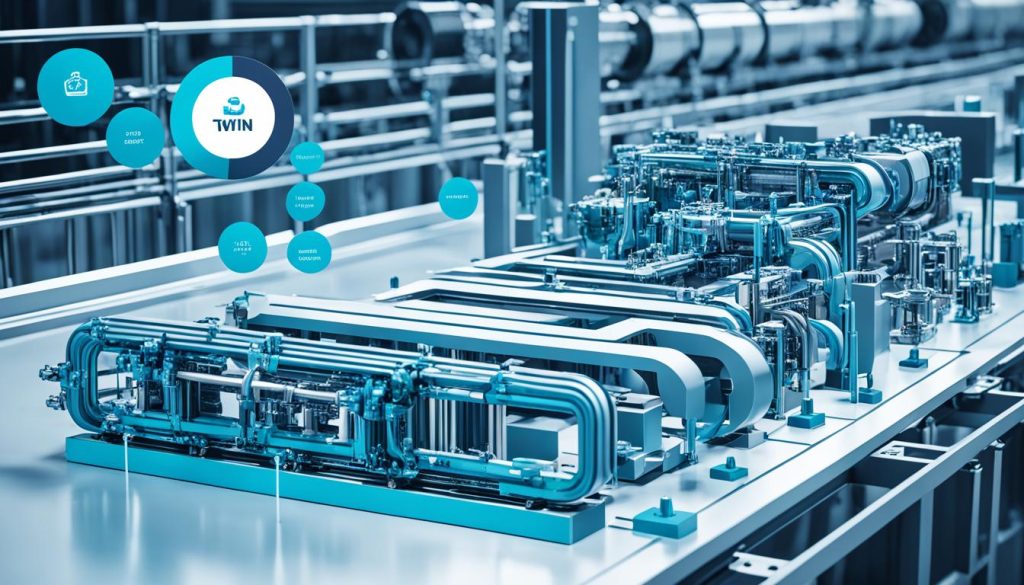
With end-to-end digital twins, you have the tools to revolutionize your manufacturing efficiency. Say goodbye to equipment downtime and hello to optimized production processes. The future of manufacturing is here, and it’s powered by digital twins.
Applications of Digital Twins
Digital twins are revolutionizing various industries with their diverse applications. From power-generation equipment to healthcare services, digital twins are being utilized to optimize operations and drive efficiency. Let’s explore some of the key applications of digital twins:
Power-Generation Equipment: Enhancing Performance and Efficiency
Digital twins play a crucial role in the power-generation industry by optimizing maintenance and reducing downtime. By creating virtual replicas of power-generation equipment, such as turbines and generators, organizations can monitor real-time data and identify potential issues before they escalate. This proactive approach helps improve performance, maximize efficiency, and ensure uninterrupted power supply.
Structures and Systems: Fueling Efficiency and Performance
The design and maintenance of structures and systems, such as buildings, offshore platforms, and infrastructure, can greatly benefit from digital twins. By simulating various scenarios, digital twins enable engineers and architects to evaluate structural integrity, analyze performance, and identify areas for improvement. This technology empowers stakeholders to make informed decisions that enhance efficiency and deliver superior results.
Manufacturing Operations: Streamlining Processes and Guiding Production
In manufacturing, digital twins are instrumental in optimizing operations and guiding products from design to the finished product. By creating virtual replicas of production lines, organizations can simulate and analyze different process variations, identify bottlenecks, and optimize workflows. This enables manufacturers to streamline their processes, reduce waste, improve quality, and increase overall productivity.
Healthcare Services: Tracking Patient Health and Generating Insights
Digital twins are revolutionizing healthcare services by enabling real-time patient monitoring and generating valuable insights. By integrating data from wearable devices, medical records, and physiological sensors, digital twins can track patient health indicators and provide healthcare professionals with personalized insights. This technology helps in early detection, remote patient monitoring, and the development of targeted treatment plans.
Automotive Industry: Enhancing Vehicle Performance and Production Efficiency
In the automotive industry, digital twins are used to improve vehicle performance, optimize production processes, and enhance overall efficiency. By creating virtual replicas of vehicles, manufacturers can simulate and analyze different design configurations, assess fuel efficiency, test safety features, and optimize manufacturing procedures. This technology enables automakers to deliver cutting-edge vehicles that meet customer expectations and regulatory standards.
Urban Planning: Informing Data-Driven Decision Making
Digital twins have emerged as valuable tools in urban planning, providing real-time data and insights for informed decision making. By creating virtual models of cities and their infrastructure, urban planners can simulate scenarios, evaluate the impact of various interventions, and optimize resource allocation. This technology helps create sustainable, resilient, and livable cities for residents and businesses alike.
As digital twin technology continues to evolve, its applications are expected to expand further, unlocking new possibilities across industries. By harnessing the power of data integration, simulation modeling, and real-time monitoring, digital twins are transforming the way we design, operate, and optimize systems and processes.
| Industries | Applications |
|---|---|
| Power-Generation Equipment | Optimizing maintenance and reducing downtime |
| Structures and Systems | Improving efficiency and performance |
| Manufacturing Operations | Streamlining processes and guiding production |
| Healthcare Services | Tracking patient health and generating insights |
| Automotive Industry | Enhancing vehicle performance and production efficiency |
| Urban Planning | Informing data-driven decision making |
Conclusion
In conclusion, Digital Twin Technology has the potential to revolutionize industries by providing valuable insights and improving efficiency in product design, manufacturing, and operations. By harnessing real-time data, simulation modeling, and artificial intelligence, digital twins offer a glimpse into the future of optimization and performance optimization.
The market for digital twins is experiencing rapid growth, indicating the increasing demand for this technology. As organizations continue to embrace digital twin technology, new possibilities emerge in the digital age, unlocking untapped potential for innovation and growth.
With the ability to generate accurate virtual representations and leverage data-driven decision making, digital twins empower organizations to streamline processes, enhance productivity, and optimize resource utilization. By embracing this technology, organizations can stay ahead of the competition and unlock new possibilities for growth and success in the ever-evolving business landscape.